

April 8, 2026
The Complete Guide to Hiring an Asphalt Paving Contractor in Boston
The Complete Guide to Hiring an Asphalt Paving Contractor in Boston is designed to help property managers, facility managers, and business owners make a smart decision before starting a commercial paving project. Hiring the right contractor affects durability, safety, project timelines, and how often you will need to deal with repairs in the future.
Key Summary
- Hiring an asphalt paving contractor in Boston starts with understanding your property’s condition and project goals
- Commercial paving projects require proper planning, site preparation, and long-term thinking
- The right contractor should have commercial experience, a clear process, and strong communication
- Red flags include vague scopes, poor planning, and no focus on drainage or base work
- The Asphalt Calculator can help estimate project size before you speak with a contractor
What an Asphalt Paving Contractor in Boston Actually Does
An asphalt paving contractor in Boston installs, repairs, resurfaces, and maintains asphalt surfaces for commercial properties. This includes parking lots, access roads, industrial surfaces, and other paved areas that need to handle regular traffic and long-term wear.
A qualified contractor does more than apply new asphalt. The job includes evaluating the site, identifying structural problems, reviewing drainage, preparing the base, and making sure the finished surface performs over time.
If you are comparing providers, reviewing a page like Asphalt Paving Contractor Boston can help you understand what a full commercial paving project typically includes.
When You Need Paving Instead of Repair
One of the first questions property owners ask is whether the lot needs a full paving project or a more targeted repair. That decision depends on how widespread the damage is and whether the base underneath the surface is still stable.
Repair usually makes sense when the problems are limited to specific areas. That may include isolated potholes, minor cracking, or localized wear. In those situations, targeted work can extend the life of the surface without a full replacement.
Full paving becomes the better choice when there is widespread cracking, multiple potholes, poor drainage throughout the lot, or evidence that the structure underneath has failed. In those cases, patching may only delay a larger problem.
For commercial properties, choosing the wrong path often leads to repeat repairs, more disruption, and a shorter pavement life cycle.
What the Commercial Paving Process Looks Like
A commercial paving project should follow a clear process from evaluation to completion. That process usually starts with a site visit and assessment. The contractor reviews the existing condition of the asphalt, measures the area, and identifies anything that could affect the project, such as drainage issues or damaged base material.
From there, the work typically moves into preparation. This may include removing failed asphalt, grading the area, compacting the base, and setting the site up for proper installation. Preparation matters because poor base work is one of the biggest reasons asphalt fails early.
After the prep work is complete, the asphalt is installed and compacted to the right density. The surface is then finished, and if the project involves a parking lot, it may also include striping and layout work.
A good contractor will explain each phase clearly so there are no surprises during the project.
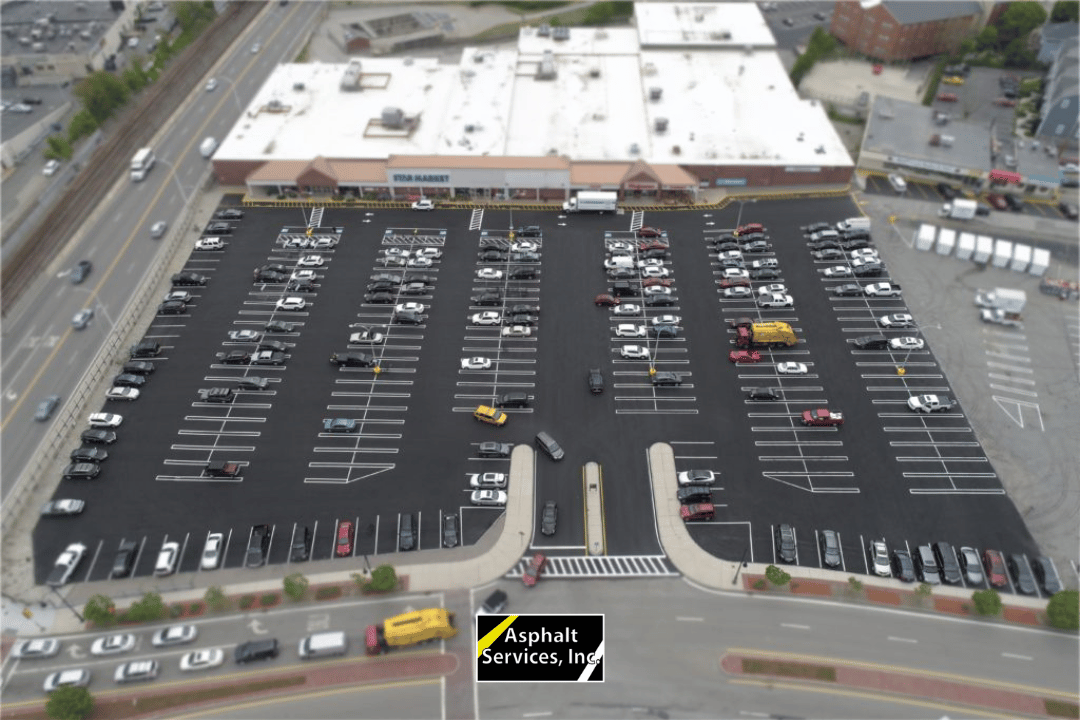
Planning and execution of a commercial asphalt paving project in Boston
How to Choose the Right Contractor
Hiring an asphalt paving contractor in Boston should not come down to who gives the fastest answer or the lowest number. It should come down to whether the contractor understands commercial paving and can deliver a project that lasts.
Look for a contractor that has real experience with commercial properties. Parking lots and high-traffic surfaces are different from small residential-style jobs. They require planning, traffic management, proper drainage, and an understanding of how the lot will perform under regular use.
You should also look for a contractor that communicates clearly. The right partner should be able to explain the condition of your surface, outline the recommended scope of work, and walk you through what to expect before the job starts.
If the contractor cannot explain the process in a way that makes sense, that is usually a warning sign.
Red Flags to Avoid Before Hiring
There are a few common red flags that should make you pause when comparing contractors.
- No detailed site evaluation before discussing the project
- Vague scope of work with little explanation of what is included
- No mention of drainage, grading, or base preparation
- Limited communication around timeline and logistics
- No clear commercial project experience
These issues usually show up later as change orders, project delays, or premature asphalt failure. Commercial paving is not something you want to guess on. The quality of the planning affects the quality of the finished result.
Questions to Ask Before You Hire
Before selecting a contractor, it helps to ask questions that go beyond the surface.
- What is included in the scope of work
- How will you evaluate the condition of the base
- How do you handle drainage issues
- What is the expected timeline for this project
- How do you minimize disruption during the work
These questions help you compare contractors on quality and planning, not just appearance or speed of response.
Why Commercial Projects Need a Different Approach
Commercial paving projects have more moving parts than many property owners realize. There are usually more vehicles, more users, more liability concerns, and less room for downtime.
A surface that looks acceptable at a glance may still have drainage issues, structural failure, or weak spots that become major problems under commercial traffic. That is why businesses need a contractor that understands long-term performance, not just surface appearance.
If your project involves active parking lots or shared-use access areas, planning becomes even more important. The contractor should account for safety, traffic flow, and how the project affects the people using the property.
How to Plan Your Project the Right Way
Good planning reduces disruption and helps the work move faster. Before the project begins, businesses should think through how the site will function during the job.
That may include coordinating temporary access, notifying tenants or staff, and understanding whether the work will happen in phases. The more organized the planning is upfront, the smoother the project usually goes.
The right contractor should help guide this process instead of leaving the property owner to figure it out alone.
Estimating Your Project Scope Before You Reach Out
Many property managers want to get a rough idea of project size before talking to a contractor. That is reasonable, especially when you are trying to plan internally.
One way to do that is by using the Asphalt Calculator. It can help estimate material needs based on dimensions and depth, which gives you a starting point before a formal site evaluation.
The calculator is not a substitute for a contractor’s assessment, but it is a useful tool for understanding scale and preparing for the conversation.
Supporting Services That May Be Part of the Right Solution
Not every property needs a full rebuild. In some cases, a more targeted service may be the right answer depending on the condition of the surface and the goals for the property.
For example, some sites benefit from Commercial Paving as part of a larger site improvement plan, while others may need resurfacing or repair work to extend the life of the pavement before a future replacement.
The important part is making the decision based on actual site conditions, not assumptions.
What the Best Decision Usually Comes Down To
The best decision usually comes down to three things. First, what condition is the pavement really in. Second, how long do you need the solution to last. Third, how much disruption can the property handle in the short term.
A good contractor helps you work through those questions without overcomplicating the process. They should be able to explain what your pavement needs, why it needs it, and what the long-term implications are.
That clarity matters because commercial paving is not just a maintenance decision. It is an operational decision too.
Next Steps for Your Boston Paving Project
If you are evaluating your property and need help determining the right path, the next step is a professional site review. An experienced contractor can help you understand whether you need repair, resurfacing, or full paving based on the actual condition of the surface.
If you are ready to discuss your project, you can Request a Quote or Contact Us to start the conversation.
Frequently Asked Questions
What does an asphalt paving contractor in Boston do
An asphalt paving contractor in Boston installs, repairs, resurfaces, and maintains commercial asphalt surfaces such as parking lots, roadways, and access lanes.
How do I choose the right asphalt paving contractor in Boston
Choosing the right asphalt paving contractor in Boston means looking for commercial experience, clear communication, proper planning, and a detailed understanding of site conditions.
How do I know if I need paving or repair
You can determine whether you need paving or repair by evaluating how severe and widespread the damage is. Widespread cracking, poor drainage, and structural issues usually point to full paving.
Can I estimate my project before speaking with a contractor
Yes. The Asphalt Calculator can help estimate material needs and project size before a contractor performs a full site evaluation.
Why are commercial paving projects different
Commercial paving projects are different because they involve heavier traffic, more liability concerns, more coordination, and a greater need for long-term durability.
Related Blogs
The Complete Guide to Hiring an Asphalt Paving Contractor in Boston
The Complete Guide to Hiring an Asphalt Paving Contractor in Boston is designed to help property managers, facility managers, and business owners make a smart decision before starting a commercial [...]

What to Expect from an Asphalt Paving Contractor in Boston
What to Expect from an Asphalt Paving Contractor in Boston is one of the most important things a property manager or business owner can understand before starting a commercial paving [...]
Do You Need Asphalt Paving or Asphalt Repair in Boston
Do You Need Asphalt Paving or Asphalt Repair in Boston is a common decision for property managers and business owners dealing with surface damage. Choosing the right option affects safety, [...]