
October 2, 2026
Parking Lot Restriping: The Complete Guide for Property Managers
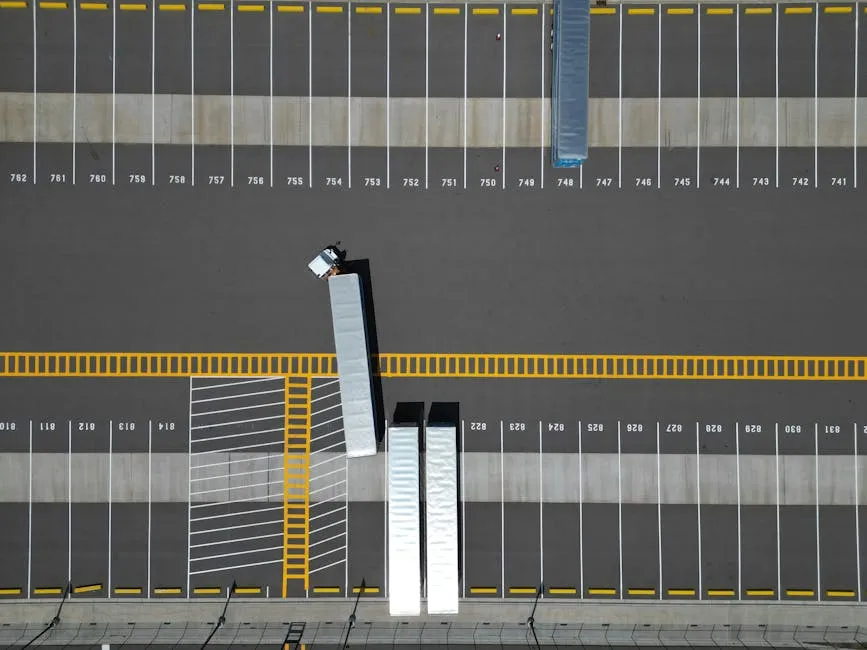
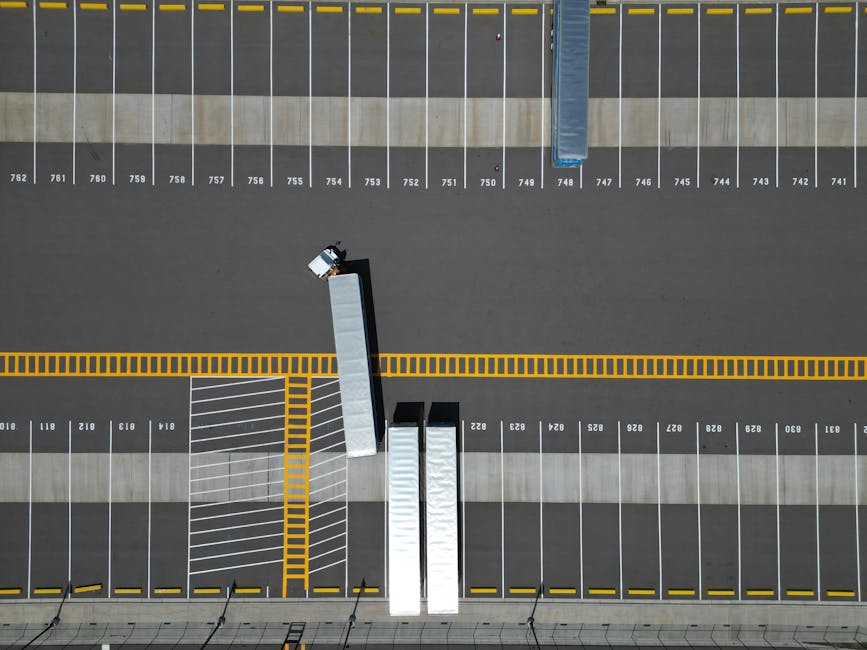
Faded parking lot lines don’t just look neglected, they create confusion, slow down traffic flow, and can quietly put your property out of compliance with accessibility requirements. Restriping is one of the easiest maintenance items to overlook, but it’s also one of the first things tenants, customers, and visitors notice.
This guide covers everything a property manager or facilities director needs to know about parking lot restriping: how to tell when it’s time, what the process actually involves, how ADA compliance factors in, and what determines cost.
Key Summary
- What it is: Parking lot restriping is repainting the lines, symbols, and markings after they’ve faded or become inconsistent.
- When to do it: Most commercial lots need restriping every 1 to 2 years, though traffic volume and climate shift that window.
- Why it matters: Beyond appearance, faded striping affects traffic flow and can put a property out of ADA compliance.
- What it costs: Pricing depends on lot size, layout complexity, and paint type — request a free estimate for exact numbers.
What Is Parking Lot Restriping?
Parking lot restriping is the process of repainting the lines, arrows, symbols, and markings on a lot’s surface after the original striping has faded, chipped, or become inconsistent from repeated touch-ups over the years. It’s a separate project from paving or sealcoating, though the three are often scheduled together as part of a broader maintenance plan.
Signs Your Parking Lot Needs Restriping
Most property managers don’t think about restriping until someone points it out, usually a tenant, a visitor, or an inspector. A few signs it’s already overdue:
- Faded or “ghost” lines: Markings that are barely visible from a distance, especially in direct sunlight.
- Inconsistent spacing: Parking spaces that don’t line up evenly, often the result of touch-ups painted slightly off from the original layout over multiple repaintings.
- Hard-to-read accessible symbols: Faded handicap symbols or access aisle markings, which is both a usability issue and a compliance risk.
- Confused traffic flow: Drivers stopping, hesitating, or cutting across lanes because directional arrows and stop bars are no longer visible.
How Often Should You Restripe a Parking Lot?
Most commercial parking lots need restriping every 1 to 2 years, but that window moves depending on a few factors. High-traffic lots, like those at retail centers or apartment complexes, wear down faster than a lightly used office lot. Paint quality and application method matter too. A rushed or thin application fades much faster than a properly applied coat.
Climate plays a bigger role than most people expect. Here in New England, salt, sand, and snowplow blades put striping through a beating that lots in milder climates never see. Freeze-thaw cycles also work against paint adhesion over the winter months, which is part of why many property managers here find themselves restriping closer to the 1-year mark than the 2-year mark.
Best Time of Year to Restripe a Parking Lot
Weather plays nearly as big a role in scheduling parking lot restriping as the condition of the lot itself. Most commercial-grade striping paints need the surface temperature to stay above roughly 50°F for at least 24 hours after application to cure and bond properly. Paint applied too close to freezing temperatures can look fine on the day of the job and still fail within a season, since a rushed cure weakens how well it adheres to the asphalt.
For properties here in New England, that generally narrows the workable window to late spring through early fall, roughly May through October, when daytime temperatures stay consistently warm and overnight lows are unlikely to drop below that threshold. Restriping outside that window isn’t impossible, but it raises the odds of a delayed cure, poor adhesion, and lines that need to be redone sooner than expected.
Many property managers schedule restriping around a seasonal uptick in traffic, retail properties ahead of the holiday shopping season, schools before the fall semester starts, so the lot looks sharp when visitors and customers show up in larger numbers. Booking the work early in the season also leaves more room to reschedule around a rained-out date, which is a much easier fix in June than it is in late September with winter closing in.
What Does It Cost to Restripe a Parking Lot?
Restriping cost depends on a handful of variables: the total square footage of the lot, how many spaces and symbols need to be repainted, whether accessible markings and fire lane text are included, and how much prep work is needed to remove or paint over the old lines cleanly. A simple lot with a straightforward layout costs less than a large lot with a complex design, multiple accessible spaces, and custom markings.
Because every lot is different, we don’t publish a flat rate. The most accurate way to get a number for your property is a free, no-obligation estimate. Contact our team or request a proposal and we’ll walk your property and give you a real quote.
How the Restriping Process Works
Restriping starts with a layout review. A contractor should measure your existing spaces against current standards, not just repaint over whatever is already there, since old layouts sometimes lose spaces to poor planning or outdated accessible-space ratios. From there, the surface is cleaned and any old paint that would interfere with a clean new line is addressed.
Paint is then applied using striping machines for straight, consistent lines, and stencils for symbols like accessible icons, arrows, and lettering. Most commercial-grade striping paint cures enough to reopen the lot to traffic within a few hours, though full cure time can take longer depending on temperature and humidity. Our site evaluation process is where layout questions like this get caught before paint goes down, not after.




ADA Compliance and Restriping
Restriping is one of the specific triggers ADA.gov calls out directly in its compliance brief on restriping parking spaces, part of the 2010 ADA Standards for Accessible Design. A lot striped under the earlier 1991 standards may have been “grandfathered” under a safe harbor provision, but a planned alteration like restriping or resurfacing removes that protection, meaning the layout needs to meet current standards at that point, not the older ones it was originally painted under.
According to the ADA National Network’s accessible parking guidance, the specifics worth checking during any restriping project include:
- Number of accessible spaces: Required counts scale with total lot size, starting at 1 accessible space for lots with 25 or fewer spaces up to 20 spaces (plus 1 per additional 100) for lots over 1,000. A 100-space lot needs 4 accessible spaces; a 400-space lot needs 8.
- Van-accessible spaces: At least 1 of every 6 accessible spaces must be van-accessible.
- Dimensions: Standard accessible spaces are 8 feet wide; van-accessible spaces are 11 feet wide (or 8 feet wide if paired with an 8-foot access aisle). Access aisles are 5 feet wide and can be shared between two spaces.
- Vertical clearance: Van-accessible spaces, their aisles, and the routes serving them need at least 98 inches of clearance for lift-equipped vehicles.
- Signage: Accessible spaces need a posted sign with the International Symbol of Accessibility, mounted with the lower edge at least 5 feet above the ground. Van-accessible spaces need a sign that also says “van-accessible.”
Non-compliant accessible parking is a liability exposure for property owners, and restriping is the natural point to correct it. A contractor familiar with these standards should check your layout against them as part of any restriping project rather than simply repainting the existing lines in place.
Worth noting: Massachusetts, New Hampshire, Rhode Island, Connecticut and other States can each layer their own accessibility requirements on top of the federal ADA minimums. Massachusetts, for example, requires a van-accessible space for every 8 accessible spaces under its state code, a stricter ratio than the federal 1-in-6 standard. Requirements can vary by state and by municipality, so it’s worth checking with your state’s architectural access board or building code office, or asking your contractor, to confirm there isn’t a stricter local rule that applies to your property before restriping.
Restriping After Sealcoating
One detail that catches a lot of property managers off guard: if you sealcoat your parking lot, your existing lines get covered in the process and have to be repainted afterward. Sealcoating and restriping are often bundled into the same project for exactly this reason. If you’re planning a sealcoat, ask your contractor how restriping is handled as part of the scope, not as a separate add-on you discover after the fact. Our sealcoating and striping services page covers how the two are typically scheduled together.
DIY vs. Professional Restriping
Restriping looks simple from the outside, it’s just paint, after all, but a few things separate a professional job from a DIY attempt. Commercial-grade paint is formulated to hold up to vehicle traffic and weather far longer than consumer-grade options. Striping machines produce straight, consistent lines that are difficult to replicate by hand, and layout planning requires knowing current spacing and accessibility standards, not just recreating what was there before. Most property managers find that the cost difference between DIY materials and a professional job is smaller than expected, while the difference in how long the result lasts is significant.
Restriping for Specific Property Types
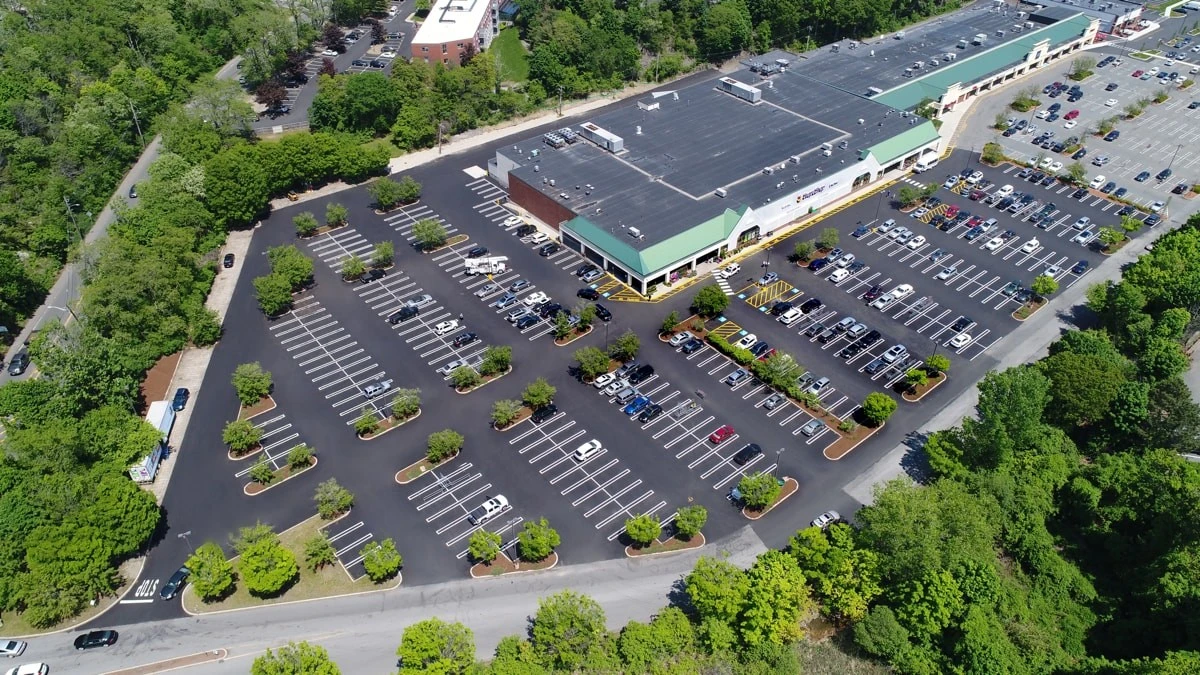
Restriping needs vary by property type. Schools and universities often restripe during summer or holiday breaks to avoid disrupting daily operations, and typically need clearly marked bus loading zones alongside standard parking. Condominiums and HOAs tend to have designated resident spaces and visitor parking that require careful layout planning to avoid disputes. Retail properties see the heaviest day-to-day traffic and often need the most frequent restriping to keep a professional appearance for customers.
Restriping FAQs
How often do parking lots need to be restriped?
Most commercial lots need restriping every 1 to 2 years, though high-traffic properties and lots in harsh winter climates often need it closer to every year.
How much does it cost to restripe a parking lot?
Cost depends on lot size, layout complexity, and how many accessible spaces and symbols need repainting. Request a free estimate for an exact number for your property.
Do you need to restripe after sealcoating?
Yes. Sealcoating covers existing lines, so restriping is required afterward to restore markings. Many contractors bundle both services into a single project.
Conclusion
Parking lot restriping is one of the easiest maintenance tasks to put off, and one of the quickest to become a real problem, whether that’s confused traffic, a frustrated tenant, or an ADA compliance gap. If your lot’s lines are fading, inconsistent, or hard to read, now is the time to get ahead of it.
Ready to Restripe Your Parking Lot?
- 30+ years of commercial paving experience
- Family owned and locally operated
- Full-service paving, sealcoating, and striping
- Serving MA, NH, RI, and CT
Related Blogs
Asphalt Driveway Cost Calculator: A Guide for Commercial Properties
A commercial driveway takes a different kind of punishment than a parking lot. It's the first thing customers, delivery trucks, and staff drive over every single day, and it's usually [...]
5 Do’s and Don’ts for Boston Asphalt Paving
Discover 5 do's and don'ts for Boston asphalt paving: prioritize drainage, winter prep, maintenance, ADA compliance, and vet contractors for lasting results.
The Complete Guide to Hiring an Asphalt Paving Contractor in Boston
The Complete Guide to Hiring an Asphalt Paving Contractor in Boston is designed to help property managers, facility managers, and business owners make a smart decision before starting a commercial [...]