
April 27, 2026
5 Do’s and Don’ts for Boston Asphalt Paving
Why Boston Asphalt Paving Decisions Can Make or Break Your Commercial Property
Understanding Why Boston Asphalt Paving Decisions Can Make or Break Your Commercial Property is essential for facility managers who need to protect their investment against the harsh New England climate.
Boston asphalt paving is one of the most critical — and most mismanaged — investments a commercial property owner or facility manager can make in New England. Get it right, and you have a durable, low-maintenance surface that handles heavy traffic and brutal winters for 15–20 years. Get it wrong, and you’re dealing with potholes, liability risks, and costly emergency repairs within just a few seasons.
Key Summary: 5 Do’s and Don’ts for Commercial Paving
01
DO
Prioritize sub-base and drainage integrity
02
DON’T
Ignore the impact of New England winters
03
DO
Implement a proactive maintenance plan
04
DON’T
Overlook ADA compliance and city regulations
05
DO
Vet your contractor for commercial capacity
Boston’s climate is uniquely punishing on pavement. Freeze-thaw cycles, heavy snowfall, and road salt create a cycle of damage that compounds fast — especially on commercial lots with high vehicle loads. With over 2,000 paving contractors listed in the Boston area alone, choosing the wrong one is an easy and expensive mistake.
This guide cuts through the noise. Whether you manage a retail plaza, office park, or industrial facility, these five rules will help you protect your pavement investment and avoid the most common — and costly — mistakes.
Do Prioritize Sub-Base and Drainage Integrity
When it comes to Boston asphalt paving, what you don’t see is actually more important than what you do see. The sleek, black surface of a newly paved commercial lot is only as strong as the layers beneath it. For commercial properties in Massachusetts, the foundation is where the battle for longevity is won or lost.
The Foundation of Commercial Pavement
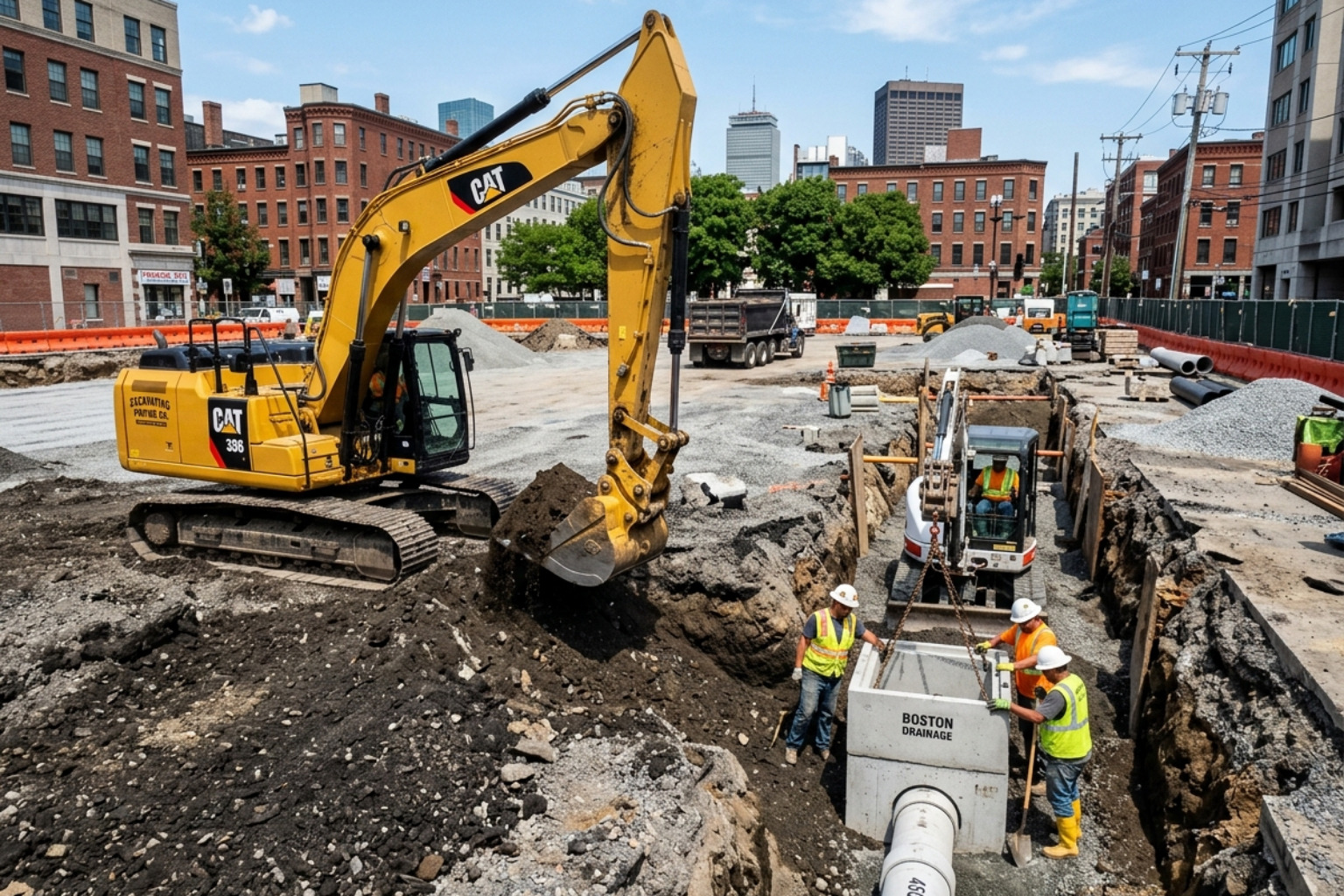
A commercial-grade sub-grade must be engineered to withstand the specific load-bearing requirements of industrial traffic, delivery trucks, and high-volume customer vehicles. This process begins with expert excavation and soil stabilization. If the soil is soft or prone to shifting, it must be reinforced before any stone is laid.
Proper compaction of the aggregate base is non-negotiable. Without a rock-solid foundation, the asphalt will eventually succumb to rutting—those deep indentations caused by heavy tires—and structural cracking. Professional excavation and grading services ensure that the site is prepared to handle the literal tons of pressure it will face every single day.
Managing Water Runoff in Urban Boston
In an urban environment like Boston, where space is tight and surfaces are often non-porous, water is the primary enemy of pavement. Standing water doesn’t just create a slip hazard for customers; it actively erodes the asphalt binder and seeps into the sub-base, causing the foundation to soften and collapse.
Effective drainage systems, including strategically placed catch basins and proper sloping, are essential. In many Boston commercial lots, older catch basins may have shifted or collapsed. Catch basin repair and adjustment should always be part of a major paving project to ensure that snowmelt and heavy New England rain move off the surface as quickly as possible.
Don’t Ignore the Impact of New England Winters on Boston Asphalt Paving
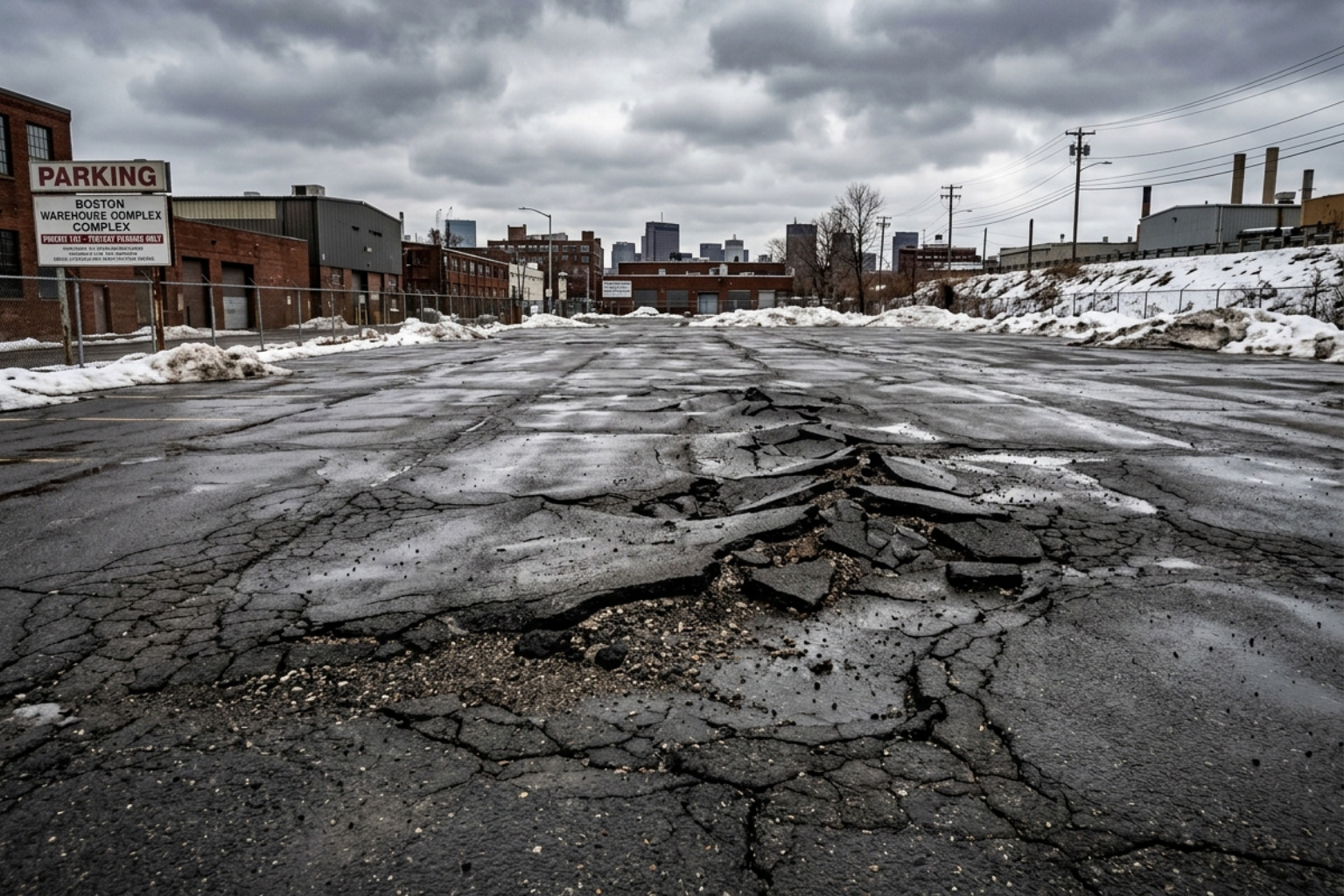
April 2026 finds us looking back at another typical New England winter, and the evidence of its toll is visible on every roadway. The “freeze-thaw cycle” is not just a meteorological term; it is a mechanical process that can tear a parking lot apart. For a technical overview of how asphalt materials perform, the Federal Highway Administration asphalt pavement resources provide useful background on pavement behavior and maintenance best practices.
Preventing Potholes and Structural Damage
When water enters small cracks in the pavement and freezes, it expands. This expansion exerts immense pressure on the asphalt. When the ice thaws, it leaves a void. Repeat this dozens of times over a single winter, and you have the recipe for a pothole.
In Boston, frost heaving-where the ground itself expands upward due to frozen moisture in the soil-can cause “alligator cracking,” a series of interconnected breaks that resemble the skin of a reptile. Once this structural damage occurs, pothole repair and patching must be addressed immediately to prevent the damage from spreading to the entire lot.
The Role of Professional Snow Management
Commercial property managers often overlook the damage caused by snow removal. Heavy plow blades can gouge the surface, especially if the asphalt was already weakened by age or poor installation. Furthermore, the salt and chemical de-icers used to keep lots safe are corrosive. While necessary for safety, these chemicals accelerate the oxidation of the asphalt, making it brittle and more prone to cracking. Selecting a contractor who understands the intersection of paving and snow management is vital for the long-term health of your property.
Do Implement a Proactive Commercial Maintenance Plan
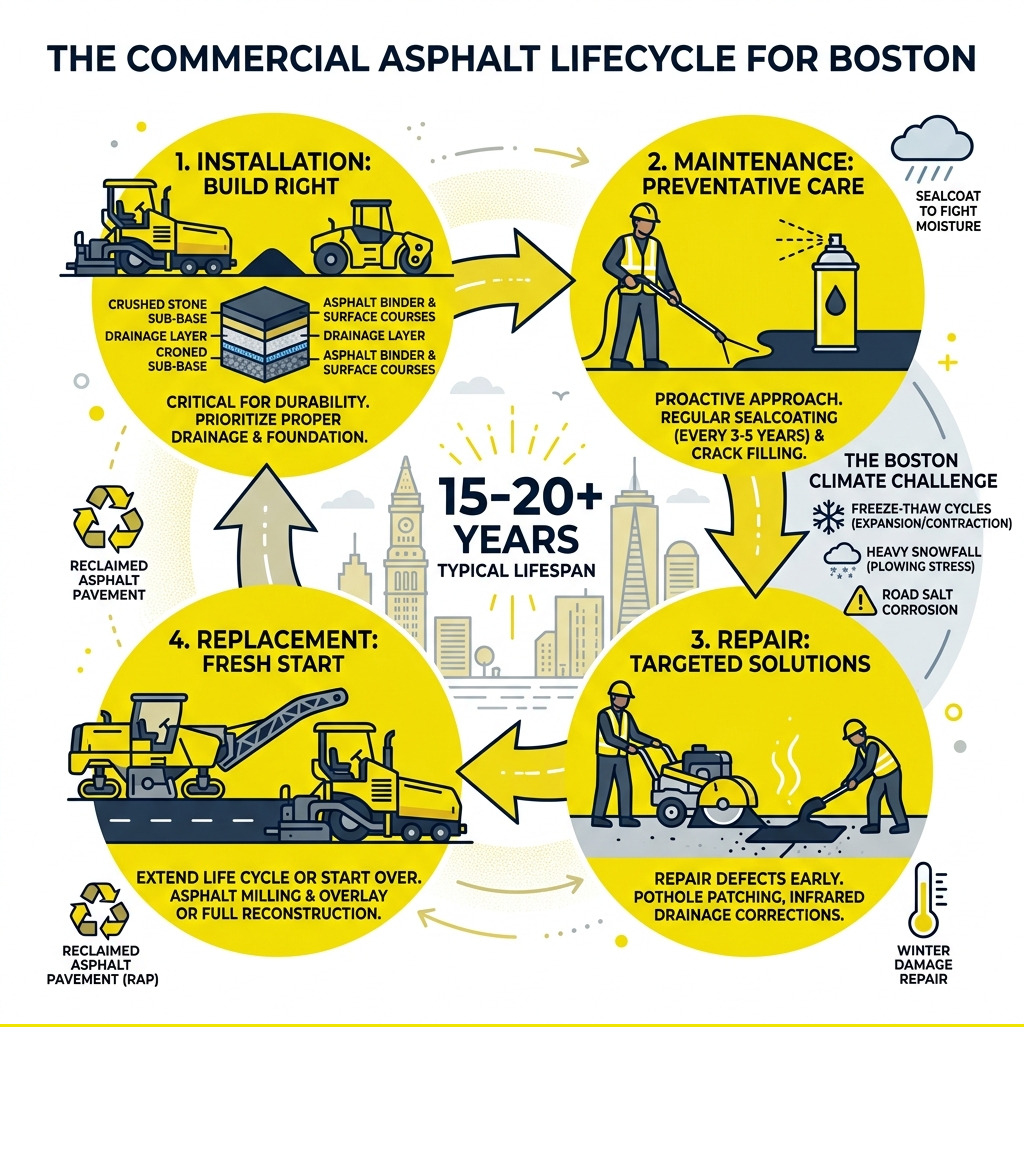
If you wait until you see a pothole to call a contractor, you’ve already lost money. Proactive maintenance is the difference between a lot that lasts 20 years and one that needs a total overhaul in 10.
Maximizing the Lifespan of Boston Asphalt Paving
The sun’s UV rays are just as damaging as winter ice. UV exposure causes oxidation, which turns asphalt from deep black to a brittle gray. Once oxidized, the pavement loses its flexibility and begins to crack. Sealcoating acts as a sunscreen for your parking lot, providing a protective barrier against UV rays, oil spills, and water penetration.
For commercial lots, a maintenance schedule typically includes:
- Crack Filling: Sealing small cracks to prevent water from reaching the sub-base.
- Sealcoating: Applied every 2–3 years to rejuvenate the binder.
- Infrared Repair: Using heat to recycle existing asphalt for seamless, permanent patches on localized damage.
Enhancing Safety and Curb Appeal
First impressions matter. A lot with faded lines and crumbling edges tells customers that the business inside might be just as neglected. Professional parking lot striping and the installation of clear pavement markings improve traffic flow and reduce the risk of accidents. Beyond aesthetics, well-defined safety features like crosswalks and fire lane markings are essential for limiting your liability as a property owner.
Don’t Overlook ADA Compliance and City Regulations
Commercial paving in Boston is not just about laying blacktop; it’s about navigating a complex web of municipal codes and federal laws.
Navigating Regulations for Boston Asphalt Paving
The Americans with Disabilities Act (ADA) has strict requirements for parking lot slopes, the number of accessible spaces, and the specific signage required. If your lot is resurfaced and the slope of your handicap spaces exceeds 2%, you could be out of compliance and facing significant fines or legal action.
Furthermore, the City of Boston maintains an official Approved Asphalt Vendor List for specific types of work, particularly those involving utility excavations or public-facing sidewalks. Working with a contractor who understands regional paving standards ensures that your project passes inspection the first time.
Working with Approved Vendors for Public Access
If your commercial project involves street resurfacing or sidewalk work that connects to public property, the city requires annual re-approval of asphalt mix designs and quality control testing. This ensures that the materials used can handle the high-traffic demands of the Boston metro area.
Asphalt
- Initial Cost: Lower
- Cure Time: 24–48 Hours
- Winter Durability: Flexible (Resists Heaving)
- Maintenance: Requires Periodic Sealing
- Lifespan: 15–25 Years
Concrete
- Initial Cost: Higher
- Cure Time: 7+ Days
- Winter Durability: Rigid (Prone to Cracking)
- Maintenance: Low (but harder to repair)
- Lifespan: 30–40 Years
Do Vet Your Contractor for Commercial Capacity
With over 2,000 paving-related companies listed near Boston, the variety in quality is staggering. A company that lacks large-scale commercial experience is rarely equipped to handle a 50,000-square-foot industrial warehouse lot or a complex retail milling project.
Evaluating Experience and Equipment
Commercial paving requires specialized, heavy-duty machinery. Look for contractors who own and maintain their own fleet of milling machines, reclaimers, and high-capacity pavers. Milling is particularly important for commercial lots; it involves stripping off the damaged top layer of asphalt without disturbing the sub-base, allowing for a “level-up” resurfacing that saves time and money.
A contractor with 30+ years of experience, such as Asphalt Services, Inc., understands the logistics of commercial work. This includes managing “phased” paving to keep businesses open during construction and coordinating with municipal utility departments.
Ensuring Professional Accountability
When vetting a Boston asphalt paving partner, always verify the following:
- Licensing and Insurance: Do they carry comprehensive general liability and workers’ compensation?
- Bonding: Can they provide performance bonds for large-scale municipal or commercial contracts?
- Safety Certifications: Are they ISNetWorld certified or compliant with modern safety standards?
- References: Can they provide a list of commercial projects completed in the last 24 months?
Knowing what to expect from a contractor before the first machine arrives on site will save you countless headaches.
Frequently Asked Questions
What is the typical cost of commercial asphalt paving in Boston?
Commercial pricing is highly variable. It is influenced by the square footage of the lot, the current market price of liquid asphalt (bituminous concrete), and the amount of site preparation required (such as milling or excavation). Because commercial lots must be thicker than standard light-duty surfaces to support heavy loads, costs are calculated based on the tonnage of material and the depth of the lifts. Always request a detailed line-item estimate to understand exactly where your budget is going.
How long does a commercial paving project take to complete?
A standard resurfacing project for a medium-sized retail lot can often be completed in 1 to 3 days. However, if the project requires full-depth reclamation or extensive drainage work, it may take several weeks. Professional contractors will often work in phases, paving one half of a lot while the other remains open to traffic, to minimize disruption to your tenants or customers.
When is the best time of year for paving in Boston?
In New England, the paving season typically runs from late April through November. Hot-mix asphalt must be laid when ambient temperatures and ground temperatures are high enough to allow for proper compaction before the mix cools. Paving in the dead of winter is generally not recommended for commercial lots, as the material will not bond correctly, leading to premature failure.
Conclusion
Investing in Boston asphalt paving is about more than just a smooth surface; it’s about protecting your property’s value and ensuring the safety of everyone who visits your site. By prioritizing a strong foundation, respecting the power of New England winters, and sticking to a proactive maintenance schedule, you can turn a major expense into a long-term asset.
Asphalt Services, Inc. has spent over 30 years providing the Greater Boston area with versatile, full-service excellence in the commercial sector. From the initial grading and excavation to the final striping of a newly paved parking lot in Quincy, our family-owned team brings a level of expertise that only decades of local experience can provide.
Ready to secure your property’s future? Contact the experts at Asphalt Services, Inc. today for a comprehensive evaluation of your commercial pavement needs.
Related Blogs
5 Do’s and Don’ts for Boston Asphalt Paving
Discover 5 do's and don'ts for Boston asphalt paving: prioritize drainage, winter prep, maintenance, ADA compliance, and vet contractors for lasting results.
The Complete Guide to Hiring an Asphalt Paving Contractor in Boston
The Complete Guide to Hiring an Asphalt Paving Contractor in Boston is designed to help property managers, facility managers, and business owners make a smart decision before starting a commercial [...]
What to Expect from an Asphalt Paving Contractor in Boston
What to Expect from an Asphalt Paving Contractor in Boston is one of the most important things a property manager or business owner can understand before starting a commercial paving [...]